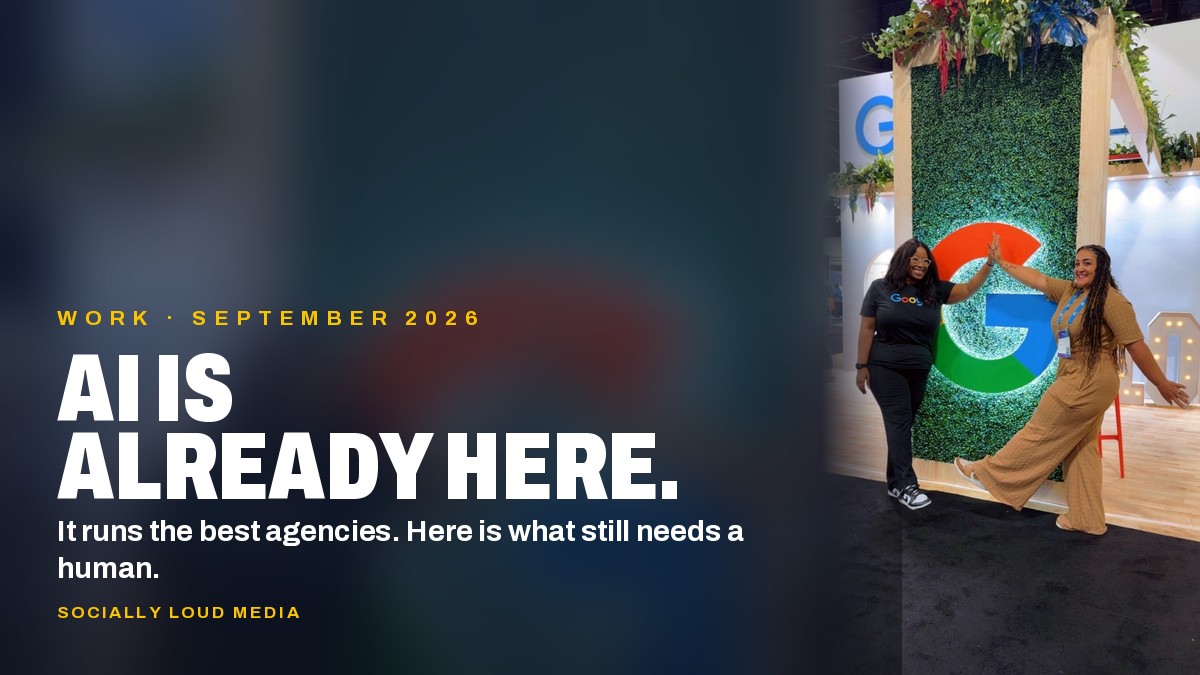
AI is already inside the work. It is in the research, the first pass, the edit, the transcript, the production calendar, the media plan and the reporting. Pretending otherwise does not make an agency more creative. It just makes it slower.
But I have also watched people hand the machine the part of the job that was supposed to be theirs: the point of view. That is where everything starts to look the same. Same rhythm. Same language. Same clean little answer with no pulse.
Speed is not the strategy.
We use technology to clear the table. It helps us find patterns, organize information and move through repetitive work. That gives the team more time for the part clients actually hire us for: knowing what to do next.
That decision still needs context. It needs somebody who understands the brand, the customer, the culture and the consequences. A tool can surface an insight. It cannot tell you whether that insight belongs in the room.
The work that stays human.
- Reading what a client means when they cannot quite say it.
- Knowing when a creator is right on paper and wrong for the moment.
- Understanding why an audience trusts one voice and scrolls past another.
- Making a call when the data is incomplete but the decision cannot wait.
- Building a relationship strong enough to survive the hard conversation.
The agencies winning now are not the ones with the longest list of tools. They are the ones that know what to automate, what to protect and what must remain unmistakably human.
Technology should make the thinking sharper and the service better. If the work gets faster but loses its voice, that is not innovation. That is just more content.